
The Rains Have Just Come!
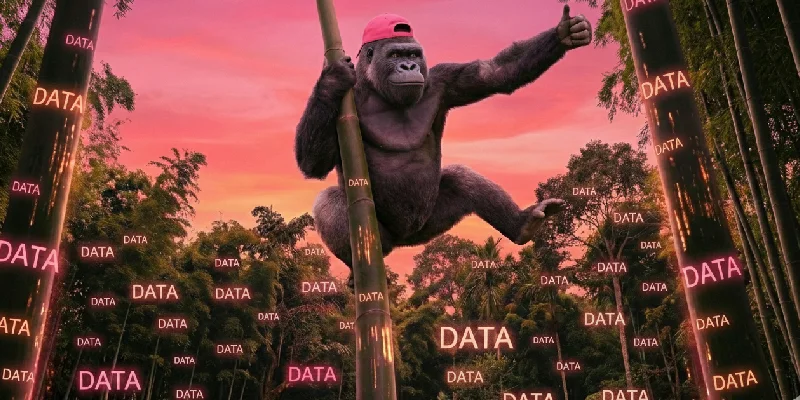
The Bolo bamboo (Gigantochloa levis) on our family farm flowered about eight years ago. Every clump, all at once — a rare event that happens only once every few decades.
Then everything died.
Within months, the entire bamboo population was gone. Dried stalks where thick green groves had stood for years. It looked like disaster. It looked like the end.
For four years, nothing. Bare ground. Empty spaces where bamboo used to be.
Then one morning — shoots. Everywhere. Overnight, it seemed. Breaking through soil that had looked barren for years.
Today there are twice as many clumps as before. In places bamboo had never grown. New territory. Expansion we couldn’t have planned or forced or bought.
The rains had come. And everything that had been building underground — invisible, patient, waiting — exploded into growth.
The Pattern Nobody Sees Until It’s Too Late
Here’s the thing about bamboo: it’s the only plant on Earth that works this way.
Moso bamboo — the giant species that covers millions of hectares across China — has been scientifically measured growing at 114.5 centimeters per day. That’s nearly four feet in twenty-four hours. Researchers watched single shoots reach ninety feet tall in just sixty days.
But here’s what the growth charts don’t show you: before that sixty-day explosion, Moso bamboo spends five to seven years doing nothing visible.
Nothing above ground, anyway.
Underground? Fifty percent of the bamboo’s total mass is roots. A vast network spreading horizontally, storing nutrients, building structure, creating the foundation that makes explosive vertical growth possible.
No roots, no shoots.
The overnight success was seven years in the making!
We’ve Been Here Before
Think about the last twenty-five years of business.
The internet arrived. Email. Websites. E-commerce. Social media. Mobile. Cloud computing.
Strong growth. Steady growth. But nothing explosive — at least in the last seven years anyhow.
That’s because we were in the root phase. Twenty-five years of infrastructure spreading underground — data centers, fiber optics, APIs, platforms, protocols. Invisible to most businesses. Just… there.
Then ChatGPT launched in late 2022.
And suddenly a shoot broke through the surface.
AI didn’t come from nowhere. It grew from the root system the internet had been building for decades. The data. The compute. The connectivity. All of it — underground, waiting for the trigger.
The rains came.
The Flowering Is Happening Now
Bamboo doesn’t flower on a schedule you can control. Depending on species, flowering happens every twenty to one hundred years. Some species go 120 years between flowerings.
When it flowers, it produces seeds. And those seeds — scattered across new territory — are the only way bamboo regenerates into new locations.
Root division? That just keeps existing clumps in place. Slow. Local. Same territory, modest expansion.
Seed regeneration? That’s how you get 2X the clumps. New ground. Explosive spread.
But you can only gather seeds during the flowering.
Miss the window, and you’re waiting another generation. Another fifty years. Another lifetime.
AI Is Flowering Right Now
This is the part most businesses don’t understand.
AI isn’t just growing. It’s flowering. This is the rare window — the once-in-a-generation moment when seeds are available.
And AGI? That’s the shoot about to break through the surface.
We’re not waiting for AI to mature anymore. We’re watching it happen in real-time. The root system is built. The trigger has been pulled. The growth will be vertical, fast, and overwhelming.
Ninety-one percent of small and medium businesses using AI already report revenue growth. Seventy-five percent are at least experimenting with it. The ones pulling ahead? Seventy-four percent of growing SMBs are increasing their data investments — compared to just forty-seven percent of declining ones.
The pattern is already visible if you’re paying attention.
The Feeding Problem
Here’s what bamboo needs to sustain that ninety-feet-in-sixty-days growth: a massive root system feeding it nutrients constantly.
Here’s what AI needs: electricity and data.
Electricity is being solved at scale. Data centers. Grid expansion. That’s a macro problem, and big players are handling it.
Data? That’s your problem. And your opportunity.
AI is hungry. The systems are growing faster than ever, and they need to eat. The businesses feeding them — with clean, complete, first-party data — will ride the growth.
The businesses with empty plates? They’ll watch from the sidelines.
You can’t grow ninety-foot shoots on a six-inch root system.
“But I’m Just a Small Business…”
Right. And here come the objections:
We don’t have the budget.
We don’t have the team.
We don’t have the technical skills.
We don’t have time to implement something complex.
We’ll get to it later, when things calm down.
Let me ask you something: Can you press a button?
Can you install a WordPress plugin, add your API keys, and pay a monthly subscription that costs less than your coffee budget?
Because that’s what “gathering seeds” actually looks like in 2025.
Not enterprise implementations. Not six-month projects. Not hiring a data team.
A button. A decision. A start.
The Starting Is the Beginning of Seeing
I’ll be honest — I didn’t always understand this.
Why bother with data? I thought. We’re too small. It’s not relevant yet. We’ll figure it out when we need to.
Then I started. And I began to see what I couldn’t see before.
The cash value of data — actual dollars on a balance sheet when it’s time to sell or raise.
The business usage value — insights now, and fuel for AI systems that get smarter every month.
And the muscle memory — the habit of finding data, capturing it, securing it. Building the rhythm so that when AI matures enough to use it brilliantly, you’re ready. Not scrambling. Ready.
The businesses planting data trees today will harvest in seven years.
The ones waiting for perfect conditions will still be staring at empty ground.
Not Your Average Tree
You’ve probably heard us talk about “Data Trees” before. Plant them now, harvest later.
But here’s the thing — when most people think tree, they think slow. An oak takes decades to mature. A hundred years to reach full size. Patient, plodding, generational growth.
Bamboo laughs at that timeline.
A hundred years for bamboo? That might just be its half-life. Some species flower, seed, and regenerate across 120-year cycles — then explode back to full size in months, not decades.
So when we say “Data Trees,” don’t get stuck thinking oak and elm. Think bamboo.
Because AI is bamboo.
Unexpected. Unusual. Nothing like what came before.
One moment there was nothing — just academics and researchers tinkering in labs. The next moment? Everything. ChatGPT. Image generation. Code assistants. Agents. The entire landscape transformed in what felt like overnight.
Nothing. Then everything.
Just like bamboo.
That’s why speed matters. That’s why urgency matters. This isn’t a hundred-year oak timeline. This is bamboo — and the shoots are already breaking through.
Start planting those “trees” today.
The Rains Won’t Wait
Back to the Bolo on our family farm.
Eight years ago, I watched it flower and die. Four years of nothing. Then — explosion. New clumps everywhere. Twice as many as before.
The bamboo didn’t ask permission. It didn’t wait for ideal conditions. When the rains came, it grew.
AI is the same.
The flowering is happening now. The shoots are breaking through. The businesses with root systems in place — with data infrastructure already capturing, already storing, already compounding — they’re about to grow faster than anyone thought possible.
The businesses still deciding whether to start?
They’ll be waiting for the next flowering.
And that could be a very long wait.
Gather your seeds. Plant your data trees. The rains have just come.
The Numbers Don’t Lie
Here’s what “slow then fast” actually looks like — bamboo growth rates alongside industry growth rates from the companies tracking them:
| Bamboo Species | Growth Rate | Source |
|---|---|---|
| Moso Bamboo (Phyllostachys edulis) | 114.5 cm/day (3.75 ft/day) — 90 ft in 60 days | Nanjing Forestry University |
| Giant Dragon Bamboo (Dendrocalamus sinicus) | 30m height in 3 months — world’s largest | Guadua Bamboo |
| Giant Bamboo (Dendrocalamus giganteus) | 46 cm/day record (1903, Sri Lanka) | Wikipedia |
| General bamboo species | Up to 91 cm/day | Aussie Bamboo |
| Industry/Market | Annual Growth Rate | Source |
|---|---|---|
| AI Infrastructure Spending | 97% YoY (1H 2024) | IDC |
| AI Market (Global) | 29-44% CAGR | Fortune Business Insights / Mordor Intelligence |
| Generative AI | 29% CAGR | ABI Research |
| GPU Revenue | 27% growth (2025) | Gartner |
| Cloud Computing | 19-21% CAGR | Gartner / IDC |
| Semiconductors | 14-19% growth | Gartner |
| IT Spending (Global) | 9.3% growth | Gartner |
| E-commerce (Global) | 8-9.5% CAGR | Statista / Oberlo |
| Traditional Retail | 3.8-4.9% growth | U.S. Census Bureau |
See the pattern?
Traditional retail grows at 4%. E-commerce at 9%. Cloud at 20%. AI infrastructure at 97% year-over-year.
That’s bamboo. Underground for years — then vertical explosion.
The question isn’t whether this growth is real. The question is whether you’re planted in the soil when the rains come.
Learn More About Transmute Engine™ → — Get started for free.
P.S. Still think you have time? Read The Seven-Year Itch You Cannot Scratch — the $23 million mistake businesses make when they believe data can wait.