
Grab the Vine the bell is Tolling
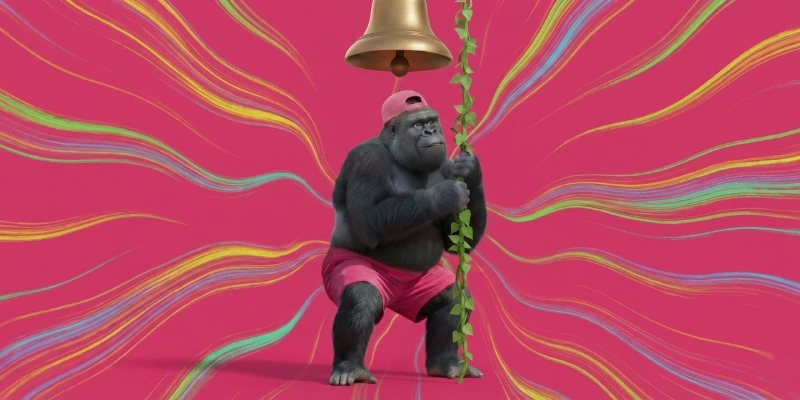
A story about swamps, surveillance, and the shopkeeper who couldn’t see her own customer.
It’s 1963. A man named Pak Ibrahim sits on the floor of a wooden house built on stilts. Beneath him, muddy water. Around him, five grandchildren. The charcoal is still glowing under the remains of ikan bakar — grilled stingray wrapped in banana leaf. His fingers are sticky with sambal.
The youngest grandchild, Aminah, is four years old. She’s half-asleep against his knee. The oldest, twelve, is pretending not to listen but hasn’t missed a word.
The house is in a fishing village. The village is on an island. The island has just been told it belongs to Malaysia. But Pak Ibrahim has heard something else — a rumour that this arrangement won’t last. That this little island, this swamp, this nothing, might be cast out. Alone. No army. No water. No rice. No future anyone can see.
He begins to tell them a story.
“Let me tell you about a country that does not exist yet.”
The charcoal crackles. The children look up.
“One day, this place — this mud, these mosquitoes, this fishing spot where your father pulls his nets — will be something none of you can imagine.”
The twelve-year-old smirks. Aminah shifts against his knee.
“There will be buildings so tall they catch clouds. Ships from every nation will line up to enter the harbour. People from everywhere will come here — not because they have gold, not because they have oil, not because they have land — but because they have something no one else will be brave enough to build.”
“What, Tok?”
“A place where a person can come with a great business idea and not be stopped.”
The Swamp That Became a Future
Two years later, Singapore was expelled from Malaysia. Lee Kuan Yew wept on television. A nation nobody wanted. A country born from rejection.
No natural resources. No freshwater. No farmland. No oil. No minerals. Nothing — except a harbour the British had built and a fisherman’s vision that something could grow in the mud.
What happened next is the most quietly rebellious act of the twentieth century.
Lee Kuan Yew didn’t protest the world order. He didn’t rage against the colonial powers. He didn’t write manifestos or form committees to study the mosquitoes.
He looked at every rule the world said was required and asked one question: does this actually work?
If yes — keep it. If no — remove it.
No ideology. No sentiment. No theatre.
He took the British legal system and kept the rule of law but removed the class structure. He kept the port infrastructure but removed the colonial dependency. He took Western financial systems and made them faster, cleaner, less captured by bureaucracy.
From third world to first. In one generation. From a swamp.
Here’s the thing nobody says about Singapore: it was built BY Europe in many senses. The British drew the borders. Laid the harbour. Installed the legal system. Taught the language. Singapore doesn’t speak English by accident.
But what Singapore did with that inheritance is what Europe itself forgot how to do.
It removed the fear.
1993: The Floor That Remembers
Thirty years after the kampong. Pak Ibrahim is gone. Not recently — he’s been gone long enough that grief has settled into something quieter. Something that lives in the hands when they prepare sambal the way he did.
Aminah is thirty-four now. She lives in a flat — not stilts over water but concrete, fourteen floors up, in Toa Payoh. The kampong is gone. Not abandoned. Erased. Bulldozed. Built over. The fishing village is a container port now. The house on stilts is a highway.
Every year, on the anniversary of Tok’s passing, Aminah gathers her family. They sit on the floor — always the floor. She prepares a simple meal. Someone recites Surah Yasin. Someone makes dua — quiet supplications for the forgiveness of his soul and the widening of his grave. This is the Malay way. No candles. No shrine. No flowers on stone. Just prayer, food, family, and remembrance. The tahlil.
She doesn’t need to visit a grave. Singapore took that option years ago — the land lease expired, the remains were moved to the crypts at Choa Chu Kang, the cemetery became something the living needed more. She understands. Tok would have understood too. He was a practical man. A fisherman doesn’t argue with the tide.
But she doesn’t need the grave. Because Tok isn’t in the ground.
He’s in the sambal her hands make from memory. He’s in the way she sits on the floor when there’s a perfectly good table behind her. He’s in the sentence she carries — the one she almost didn’t hear because she was four and half-asleep against his knee.
Not because they have gold.
She says it during the tahlil. Not out loud. Inside. Her private dua. Her annual ceremony of one sentence, passed from a fisherman to a sleeping child, now alive in a woman who can see from her kitchen window every single thing he described.
The buildings that catch clouds — there. The ships from every nation — there. The people from everywhere — her children’s classmates speak four languages.
He saw it. From a floor. Over charcoal. In a swamp.
His body is gone. His bones removed. But his spirit is in the land where he was born. Deep in the land. Not buried — planted. His vision is in the ground itself. In the roots that grow downward through concrete, through steel, through the foundation of every building that stands where his kampong stood.
Not dead. Not gone. Rising — in grace, in gratitude, and in simple power.
Aminah still sits on the floor to eat. Not because she doesn’t have a table. Because that’s how Tok sat. The old way and the new way, in the same body, in the same gesture, in the same meal.
That’s not nostalgia. That’s integration. That’s weaving.
The Loom They Forgot How to Use
Europe built the modern world. Let’s be honest about that.
Three hundred years of Renaissance, Enlightenment, Industrial Revolution, scientific method. The loom that wove modern civilisation was designed and built in Europe. The legal frameworks. The financial systems. The engineering. The universities. The languages that half the world now speaks.
And every single one of those breakthroughs came from the same place: uncertainty.
The Renaissance didn’t come from safety. It came from a continent decimated by plague. A third of the population dead. Everything burning. And from that mud — Leonardo. Gutenberg. Copernicus.
The Industrial Revolution didn’t come from comfort. It came from rebellion against the old order. People who said the rules as they are don’t serve the future and had the courage to build something new.
Europe’s greatest moments came from its greatest uncertainty.
When they had nothing to lose, they built everything.
When they had everything to lose, they built walls.
The Numbers Don’t Lie
Now stop. Before we go any further into story and metaphor, let’s ground this ship in the water.
Because the decline of European business competitiveness isn’t a feeling. It isn’t a narrative. It’s data. Hard. Specific. Unforgiving.
The GDP Collapse
The EU’s share of world GDP has fallen from 27% in 1990 to 17% in 2024. In the year 2000, the EU’s economy was six times larger than China’s. By 2025, they’re roughly the same size. The gap with the US? In 2000 it was $3 trillion. In 2025 it’s over $10 trillion.
Mario Draghi — the man who saved the euro — was asked to diagnose Europe’s economic health. His word for the situation? “Existential.” His prescription? An additional €800 billion of investment per year — roughly 5% of EU GDP — just to stay in the game. One year after his report, only 11.2% of his 383 recommendations had been fully implemented.
At his September 2025 review conference, Draghi himself was pessimistic. His assessment: every challenge he’d identified had gotten worse.
The Bundesbank chief called it “five minutes to midnight” for Germany as a leading economy. A book published in 2024 explained it all. The title? Kaput.
The Productivity Prison
EU labour productivity converged from 22% of the US level in 1945 to 95% in 1995. Then it stopped. It has since fallen back below 80% of the US level. Real disposable income per capita has grown almost twice as much in the US as in the EU since 2000.
The reason? Innovation — or the lack of it. No EU company with a market capitalisation over €100 billion has been set up from scratch in the last fifty years. Every single US company worth over €1 trillion was built in that same period.
EU companies spent €270 billion less on research and innovation than US companies in 2021. Not less per capita. Not less as a percentage. €270 billion less in total.
Europe is home to just 14% of the world’s unicorns. Attracts only 5% of global venture capital. And over a third of European unicorns relocate abroad — mostly to the US — just to access late-stage capital.
That’s not brain drain. That’s system drain.
And Then There Was GDPR
The EU’s share of world GDP fell from 27% to 17%. Its productivity growth stalled. Its unicorns relocated. Its AI researchers left for the US and didn’t come back. Its cloud market — 70% owned by three American companies. Its venture capital share — 5% of the global total.
And then, into this declining landscape, they introduced a regulation that made it harder for their own small businesses to see their own customers.
That’s GDPR.
The Data Blindfold
Meanwhile, the regulation machine grinds on.
In Germany and France, fewer than 25% of website visitors accept cookies. When a compliant “Reject All” button is offered — the kind regulators demand — 50–65% of visitors now reject tracking entirely. A study of compliant banners found that the fairer and more legally correct the banner, the higher the rejection rate. The system rewards non-compliance and punishes honesty.
The tracking data loss? Studies report 40–70% fewer data points when a real reject option is available. GA4 underreports WooCommerce revenue by 15–50% due to ad blockers and browser restrictions. Ad blocker usage across the US and UK has grown from 14% to 45% in a decade, and browsers like Brave that wipe out the cookie banners at source, with GA4 losing approximately 25–27% of all visitor data to ad blockers alone.
One case study: a Danish eyewear retailer found 34.63% of their traffic was being misattributed as “Direct” in GA4 — meaning they literally couldn’t see where their customers were coming from. After implementing server-side tracking, reported revenue jumped 37.5%.
That’s not a marketing improvement. That’s recovering data that was there all along — data the system had blinded them to.
GDPR fines since 2018 now exceed €6.2 billion across 2,800+ penalties. But here’s the thing: the largest fines go to the biggest companies — Meta, Google, Amazon — companies big enough to treat fines as a cost of doing business. The smallest fines hit the businesses least able to absorb them. A Montessori school in Spain: €5,000. A hospital: €400,000. A medium enterprise: €500,000.
GDPR compliance certification alone costs €5,000 to €100,000 depending on company size. The average fine in 2024 was €2.8 million — up 30% from the previous year.
The Surveillance Hypocrisy
But here’s where it goes from painful to absurd.
While small businesses are being fined for cookie banners, the EU built one of the largest biometric surveillance databases on earth.
The EU’s shared Biometric Matching System went live in 2025. Approximately 400 million biometric templates. Fingerprint matching and facial recognition. The Entry/Exit System now requires travellers to provide fingerprints and facial photos, stored for three years in a central database.
In December 2025, EU ministers approved negotiations to hand that biometric data — fingerprints, facial images, DNA, iris scans — to US border agencies. The decision was taken, according to the Council of the EU, “without discussion.”
Without. Discussion.
Meanwhile in London — still operating under UK GDPR — there are approximately 942,000 CCTV cameras. One surveillance camera for every 10 people. The average Londoner is captured on camera roughly 100 times per day. Nobody asks consent. Nobody gets a popup. Nobody clicks “accept all cameras.”
The hierarchy of who sees what:
Government: Everything. Your face, your fingerprints, your location, your financial records. Permission needed? None — it’s law.
Big Tech: Almost everything. Your browsing, your purchases, your social graph, your conversations. Permission needed? Buried in 12,000 words of terms of service you accepted in 2019.
Telecom providers: Every location, every connection, every call metadata. Permission needed? Regulatory mandate.
Your WooCommerce store: Someone looked at hiking boots. Permission needed? Explicit opt-in consent banner with equal-prominence reject button, cookie policy, privacy policy, data protection impact assessment, record of processing activities, and the threat of 4% of global turnover if you get it wrong.
GDPR’s own Article 23 allows member states to restrict data protection rights for national security and public safety — with no clear definition of what qualifies. The result: strict for private entities, lenient for public authorities.
The institution built to protect citizens is protecting institutions from citizens.
But Here’s What’s Actually Happening Right Now
While Europe regulates, the world is building the infrastructure of the next decade.
Southeast Asia’s e-commerce market grew 46x from $4 billion in 2012 to $184 billion in 2024. It’s projected to more than double again to $410 billion by 2030. TikTok Shop nearly quadrupled its annual GMV to $16.3 billion in a single year. Eighty-nine percent of internet users in the region shop from their phones — no consent theatre, no 47% data loss.
But this isn’t just an Asia story. This is what happens everywhere that data flows freely into AI.
Dubai supported 1,690 digital startups in 2025 — up 40% from 2024. The UAE was the first country on earth to appoint a Minister of Artificial Intelligence. Their AI strategy targets 20% of non-oil GDP from AI by 2031. While Europe debates whether to pause its own AI Act, the UAE is sending 50 Chief AI Officers on a tour of Google, Meta, OpenAI, NVIDIA, Amazon and Microsoft — not to regulate them, but to learn from them. Seventy percent of UAE residents shop online monthly. Their e-commerce market is projected to reach $13.8 billion by 2029.
Dubai is Singapore’s pattern, running again. Same playbook. No resources except position, ambition, and the refusal to be afraid of what’s coming. Another swamp — this time sand — turning into a future.
The stores collecting clean first-party data today are feeding AI systems that personalise every interaction. That predict what a customer wants before they search. That turn a website from a catalogue into a concierge — the kampong shopkeeper who knows your name, scaled to ten thousand customers.
The US invested $100 billion in AI in 2024. Europe invested $2 billion. A 50-to-1 ratio. The EU holds 5% of global AI compute.
But AI doesn’t care where you live. It cares what you feed it. And you can feed it from Munich just as easily as from Bangkok — if you have the data. If you planted the trees. If you own the pipeline.
That’s the vine swinging past right now. Not geography. Not regulation. Data.
The Nuclear-to-Coal Pattern
Now you’ve seen the numbers. Watch the pattern. It repeats.
Europe had nuclear energy. Clean. Independent. Powerful. They got afraid. Germany shut down its reactors. Went back to burning coal when the wind stopped blowing or the sun stopped shining. Then bought gas from Russia. Then funded Ukraine to fight Russia. Ideological suicide dressed as progress.
Europe had an open internet. Commerce flowing. Data flowing. Businesses growing. They got afraid. Built GDPR. Consent banners. Cookie walls. Then watched half their store owners’ data disappear behind reject buttons. Then watched those businesses pay Google and Meta to buy back access to customers they already had.
- Europe invents something brilliant
- Gets afraid of it
- Abandons it
- Watches someone else use it better
- Regulates against that someone else
- Buys the product back from them
- Calls it “strategic autonomy”
The US invested $100 billion in AI in 2024. Europe invested $2 billion. The Digital Omnibus proposals are now trying to undo the consent burden — the same burden they spent a decade building.
They’re buying cloth from the people they taught to weave. While writing rules about thread.
The Gift They Gave Away
Here’s the part that makes it a tragedy, not a comedy.
The privacy framework — the idea that citizens have digital rights — that’s genuinely European. That’s a gift to the world, like the scientific method was a gift.
And then, just like with every other European innovation, they got afraid of their own creation.
They built the privacy framework, then let it become a prison. They built data protection concepts, then weaponised them against their own shopkeepers. They gave the world the idea of digital rights, then watched Asia use those ideas more pragmatically.
Singapore watched Europe build GDPR and learned from it — then built something that protects privacy without blinding business. No consent banner theatre. No 47% data loss. Clear rules, practical enforcement, and businesses that can still see their own customers. Just like Singapore took the British legal system and made it work for a swamp — took the principle, removed the friction.
The student took the teacher’s idea again. And made it work.
Japan took Western manufacturing and removed the waste. South Korea took Western electronics and removed the “good enough.” Singapore took the British legal system and removed the ideology. China took Western industrialisation and removed the timeline.
The student didn’t steal the tools. The student inherited them. And then improved them.
Two Ways to Respond to Fear
There are only two.
Way One: Build walls around what you have.
That’s the EU. Have something valuable. Get afraid of losing it. Build walls around it. The walls destroy the thing they were protecting. Spend a decade trying to undo the walls. Call it “reform.” End up worse than before.
Nuclear → Coal → Russian gas → Fund the war against the supplier. Privacy → GDPR → Kill small business data → Buy it back from Big Tech → Hand biometrics to America.
Fear builds walls. Walls become prisons. Prisons become dependency.
Way Two: Plant in the mud.
That’s Singapore. That’s Pak Ibrahim.
When you have nothing to protect, you can’t be afraid of losing it. You can only build. And what Singapore built wasn’t a nation in the traditional sense. It was proof that fear is the wrong response to uncertainty.
The pragmatic response is: plant something. See what grows. Remove what doesn’t work. Keep what does. Don’t fall in love with the mechanism. Fall in love with the outcome.
Asia’s gift isn’t invention. Europe invented the loom. Asia’s gift is weaving — taking old and new, East and West, tradition and technology, the kampong floor and the fourteenth-storey flat, ikan bakar and AI, and braiding them together.
Not replacing one with the other. Using both.
Europe sees old and new as enemies. Tradition vs innovation. Privacy vs commerce. Protection vs progress. Binary thinking. The mind of a wall-builder.
Asia sees old and new as ingredients. Both needed. Both valuable. The question isn’t which one. The question is: what’s the recipe?
2033: The Question
Aminah is seventy-four. Her granddaughter sits with her. Not on a kampong floor — on the floor of Aminah’s flat, because Aminah still sits on the floor to eat.
The charcoal is gone. They’re eating from hawker delivery. But the fish is the same — ikan bakar. Stingray. Sambal. The recipe is Pak Ibrahim’s. Aminah’s hands make it from memory, not from a book.
The granddaughter notices the photograph on the shelf. A man she never met. Sitting in front of a wooden house, water underneath, holding a fish.
“Nenek… who is that?”
“That’s your great-great-grandfather. Tok Ibrahim.”
“Where was that?”
“Here.”
“…here?”
“Right here. Where we are now. This was water. This was mud. This was a fishing village where nobody wanted to be.”
Aminah tells the story. Not exactly the way Tok told it — because she was four, and half-asleep, and the details have softened over sixty years into something between memory and dream. But the bones of it. The feeling of it.
“He said people would come. Not because they had gold…”
The granddaughter listens. Then asks the only question that matters:
“Nenek… why didn’t the others? Why didn’t they build like this?”
Aminah pauses. Picks a fish bone from between her fingers the way Tok used to pick them from between his teeth.
“Because they kept building beautiful things and then getting afraid of them. And the fear made them stop. And when they stopped, the people they had taught kept going.”
“Is that bad?”
“No, sayang. It’s not bad. It’s sad. Because the gift was always meant to be shared. They just forgot that sharing means letting go.”
Now See Clearly
You’ve read the story. You’ve seen the numbers. You can see the threads — where they start, where they end.
Here’s where they end for the EU business owner who does nothing:
A website that loses half its visitor data before it even opens. A GA4 dashboard showing a fraction of reality. €3,000 a month to Google to buy back access to your own customers. A consent banner that punishes you for being honest. And an AI revolution arriving in 2027 that needs years of data you never collected — because the system you trusted told you it was illegal to collect it.
Empty warehouse. Hungry AI. No trees. No fruit.
Here’s where they end for the store owner who sees:
A WordPress site capturing every meaningful event through its own server-side pipeline. Events flowing to GA4, Facebook, Google Ads and a BigQuery warehouse simultaneously — through your infrastructure, not theirs. A data warehouse growing deeper every month with behavioural intelligence no platform can sample, lock, or take away. And when the AI-powered service portal arrives — and it will — you have five years of clean first-party data ready to feed it.
Full warehouse. Nourished AI. Trees bearing fruit.
The endpoints are clear. The question isn’t whether you want to be the second store owner. The question is whether you’re willing to become something different to get there.
Become the Responsible Rebel
Singapore didn’t adopt a strategy. Singapore became the responsible rebel. Every decision flowed from that identity — pragmatic, fearless, outcome-focused, no ideology.
You need to do the same thing.
Not just install a plugin. Not just switch to server-side tracking. Not just add a data warehouse. Those are tactics. They matter. But they’re not the shift.
The shift is identity.
Right now, most EU-based store owners see themselves as small businesses trying to comply with rules they don’t understand, paying platforms for access to customers they should own, and hoping it all works out.
The responsible rebel sees differently:
Stop asking permission from the system that’s blinding you. Plant your “Data Trees” (coined by Seresa) quietly, without fanfare. Own your pipeline, your warehouse, your customer intelligence. Don’t fight GDPR — operate around it through server-side infrastructure that captures what matters without the consent theatre. Don’t complain about Big Tech — stop feeding them. Build your own 2028 readiness while your competitors are still arguing about cookie banners.
The responsible rebel doesn’t burn anything down. Doesn’t protest. Doesn’t write angry posts.
Builds a better system. And leaves the door open.
This isn’t about ambition. Singapore didn’t grab the vine because it was ambitious. It grabbed the vine because the branch was already gone. There was nothing left to hold. The choice wasn’t between comfort and risk. The choice was between movement and chaos.
Your branch is breaking too. You can hear it. The consent banners eating your data. The GA4 dashboard showing half-truths. The €3,000 a month to Google for access to your own customers. The AI revolution arriving in 2028 with nothing to eat.
The vine is swinging past. Right now. Today.
This isn’t a decision about technology. It’s a decision about whether you move or whether you fall.
You may not want to move from Europe to Asia. That’s fine. You don’t have to. You may still face restrictions when serving EU clients. That’s real. Accept it.
But data is the new ground. The new territory. The new competitive advantage that doesn’t require a passport.
The businesses who SEE this now — who see what an online business WILL look like in three years — they’re planting today. The businesses who wait are Anna in Munich, paying Google to show her what’s already in her own shop.
What a Website Becomes When It Has Data
Here’s where the story stops being a parable and starts being a business plan.
By 2030 — probably sooner — your website won’t look like a website. The beautiful hero banners, the “About Us” pages nobody reads, the carefully designed product grids with lifestyle photography — gone. Not because design dies. Because design becomes irrelevant when intelligence arrives.
Think about what happens when a site has three, four, five years of clean first-party data:
It knows who you are before the page loads. It knows what you bought, what you browsed, what you abandoned, what you came back for. It knows whether you respond to urgency or patience. Whether you buy on first visit or need three touches. Whether you’re a Tuesday-morning browser or a Friday-night buyer.
We call this a Polymath Website
The website stops being a catalogue. It becomes a service portal. The visitor arrives pre-sold — AI already found them, already recommended the product, already answered their questions. They don’t come to browse. They come to buy. The only job of the site is to get out of the way and make the transaction effortless.
Function is king. Friction is the jungle.
But function alone is cold. And cold doesn’t create loyalty.
That’s where creativity moves.
Creativity doesn’t die — it migrates. It leaves the template and enters the personality layer. The branded characters. The voice. The moments of delight that make a data-driven transaction feel human.
The back end is pure intelligence. The front end is pure character. And between them — data. Years of data. Flowing through a pipeline you own, into a warehouse you control, feeding an AI that knows your customers better than you do.
That’s what Pak Ibrahim saw. Not buildings. Not technology. A place where the friction is gone and the human connection remains. The kampong shopkeeper who knows your name, knows your family, knows what fish you’ll want today — powered by data instead of memory, scaled to a thousand customers instead of ten.
Now ask yourself: which store is ready for this future?
The one in the EU that lost half its customer data to consent banners for a decade, that has empty warehouses and hungry AI, that spent €50,000 on a beautiful website design that will be obsolete by the time it launches?
Or the one that planted its data trees in 2025, captured every event through its own server-side pipeline, owns five years of clean behavioural data in its own BigQuery warehouse, and can now power a service portal that knows every customer by name?
What I Can See Will Be
Pak Ibrahim planted a vision in the mud in 1963.
His bones were removed. His kampong bulldozed. His grave erased.
But his vision rose through the concrete. In grace. In gratitude. In simple power.
Not the power of regulation. Not the power of enforcement. Not the power of fines and compliance officers and consent banners.
The simple power of a man who sat on a floor and told children about a future that didn’t exist yet. And was right.
The responsible rebel doesn’t fight the wall. Doesn’t protest the wall. Doesn’t write angry articles about the wall.
Grabs the vine swinging past it.
The endpoints are visible. The threads are clear. The only question is whether you can see them — and whether you’re willing to reach.
See clearly. Plant your data trees. Become the responsible rebel. Grab the vine.
Start with Transmute Engine™ → Get started for free.
P.S. Want to understand why 80% of AI projects fail before they even start? Read We Created a PIPE You Will NEVER Smoke — it’s the infrastructure story nobody’s telling.
P.P.S. Already wondering what a data-fed AI website actually looks like? Explore the Polymath Website — the six layers that separate a website that knows your customer from one that’s still guessing.
This article was written by Seresa, with Claude as creative partner. The island was called Temasek — “Sea Town.” A prince landed, saw something in the jungle, was told it was a lion. He renamed it Singapura — “Lion City.” The British made it Singapore. Lions have never lived there. Pak Ibrahim sat on a floor and told his grandchildren about a future. He never existed. The lion became a nation. The fisherman saw a different future. Some things don’t need to be real to be true. But the wise act fast!